PCOS Is Now PMOS: What It Means for Your Health
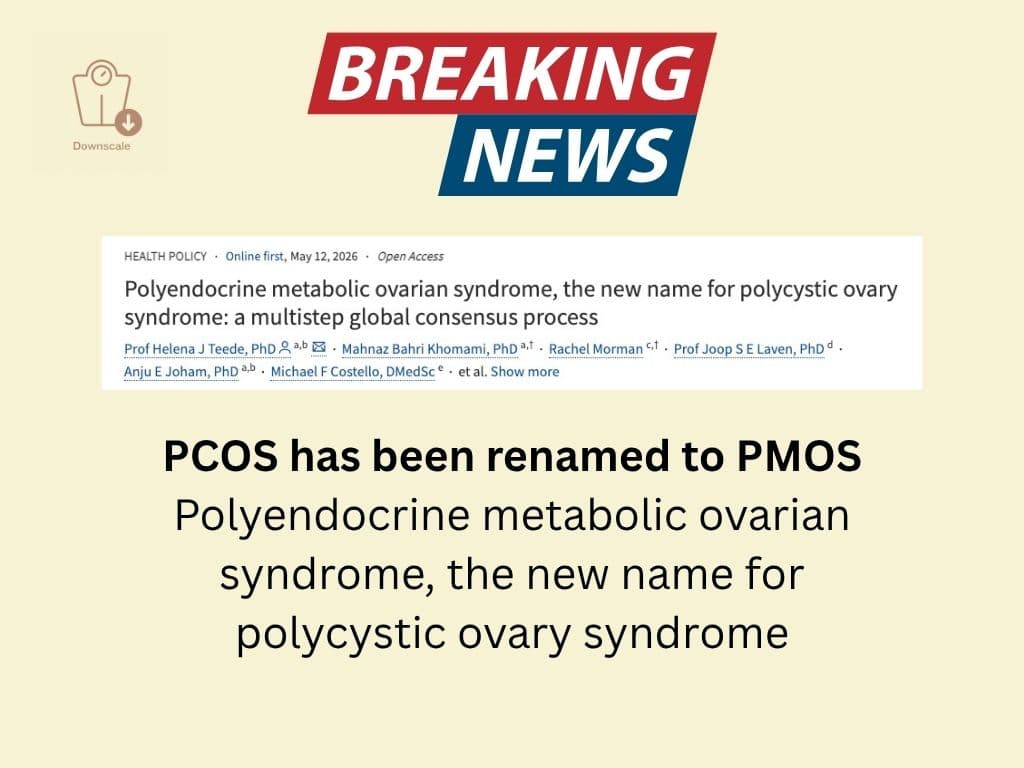
PCOS (now also known as PMOS — Polyendocrine Metabolic Ovarian Syndrome) has been renamed PMOS. Here's what the change means for women managing weight and metabolic health in Australia — and why it matters.
Downscale Weight Loss Clinic Team · Published 25 May 2026
Medically reviewed by Justin Black, Nurse Practitioner · 10 September 2026
Written from Australian and international clinical guidance and peer-reviewed research, and reviewed by a registered nurse practitioner before publication. Our clinicians are registered with AHPRA and searchable on the public register.
This page is general information, not medical advice, and it is not a diagnosis or a treatment recommendation. Talk to your own clinician about your situation.
6 min read
PCOS (now also known as PMOS — Polyendocrine Metabolic Ovarian Syndrome) Is Now PMOS: What It Means for Your Health
Category: Women's Health and Metabolic Conditions
PCOS Has a New Name — and It Changes Everything About How We Treat It
One of the most significant renamings in women's health in decades has just been confirmed. As of May 2026, polycystic ovary syndrome — better known as PCOS — is now officially called polyendocrine metabolic ovarian syndrome, or PMOS.
The change was published in The Lancet following a global consensus process led by Monash University, involving 56 international organisations and more than 14,000 patients and health professionals worldwide.
This is not a cosmetic rebrand. It is a correction — one that has been a long time coming, and one that has real implications for how this condition is diagnosed, treated, and understood by the women living with it.
Why the Old Name Was Doing Real Harm
The term "polycystic ovary syndrome" was always a clinical misnomer. It implied the condition was defined by cysts on the ovaries — but pathological ovarian cysts are not actually a diagnostic requirement. The name focused attention on one organ, narrowed clinical thinking to reproductive health, and left the broader hormonal and metabolic picture largely invisible.
The consequences were measurable. PCOS affects approximately one in eight women — more than 170 million people globally — yet research consistently shows that up to 70 per cent of those affected remain undiagnosed. A misleading name contributed to that gap. When patients and clinicians alike associate a condition with one visible feature, everything else tends to get missed.
What the New Name Actually Means
PMOS — polyendocrine metabolic ovarian syndrome — is built from three descriptors, each chosen deliberately:
-
Polyendocrine: the condition involves multiple hormone systems, not a single hormonal pathway
-
Metabolic: it fundamentally affects how the body regulates insulin, glucose, and energy
-
Ovarian: the ovaries remain involved, but as one component of a systemic condition
That middle word — metabolic — is the most important shift. It brings insulin resistance, cardiovascular risk, and metabolic dysfunction into the core definition of the condition, where they have always belonged clinically but were rarely centred in practice.
The Metabolic Reality Most Clinicians Already Know
For clinicians working in weight and metabolic health, the new name reflects what the evidence has shown for years.
Insulin resistance is present in approximately 85 per cent of people with PMOS. Critically, this includes around 75 per cent of women in a healthy weight range who have the condition — a finding that directly challenges the persistent misconception that PMOS is primarily a consequence of excess weight. It is not. It is a hormonal and metabolic condition that exists across the full weight spectrum.
The downstream risks are significant. PMOS is associated with substantially increased risk of:
-
Type 2 diabetes
-
Hypertension
-
Dyslipidaemia
-
Non-alcoholic fatty liver disease
-
Adverse cardiovascular outcomes
The 2023 international evidence-based PCOS guidelines — developed with Monash University involvement — identified these metabolic risks as central to long-term management, not secondary concerns.
Carrying excess weight, particularly central adiposity, can amplify hormonal dysregulation and worsen insulin resistance in PMOS. But the relationship runs both ways: the condition itself makes weight management genuinely harder through its effects on insulin signalling, appetite regulation, and energy metabolism. This is not a failure of willpower. It is physiology.
What This Means for Weight Management in PMOS
If you have PMOS and weight has been part of your experience, the name change quietly validates something many women have known for a long time: the difficulty was never simply about effort, and the condition was never only about your ovaries.
Because PMOS is metabolic at its core, addressing metabolic health — including weight where clinically relevant — can be a meaningful part of comprehensive management. The evidence supports:
-
Lifestyle interventions as a first-line approach
-
Modest weight loss of five to ten per cent, which has been shown to improve hormonal markers, menstrual regularity, insulin sensitivity, and quality of life
-
Pharmacological options, where lifestyle change alone is insufficient, tailored to the individual in line with clinical guidelines
What that looks like in practice varies considerably from person to person. PMOS presents differently across different women — in symptom profile, severity, weight, and metabolic risk. That is precisely why a one-size-fits-all approach is inadequate, and why care needs to involve a qualified clinician who looks at your full clinical picture.
Practical Implications — What Changes and What Does Not
For most women, day-to-day life does not change overnight. A managed three-year transition period means both "PCOS" and "PMOS" will appear in clinical settings concurrently. International guidelines — next scheduled for update in 2028 — will integrate the new terminology progressively.
If your medical records, referrals, or past results say PCOS, that is completely valid. It is the same condition, now described with greater accuracy. There is nothing you need to do differently as a result of the rename itself — but if the new framing prompts you to revisit your metabolic health with a clinician, that conversation is worth having.
How Downscale Health Approaches PMOS
At Downscale Health, we have always approached this condition as what it is: a whole-person, metabolic, and hormonal condition that deserves more than a reproductive health checklist. The new name reflects the clinical framework we already apply.
Our Nurse Practitioners — AHPRA-registered and SCOPE-certified — provide telehealth consultations across every state and territory in Australia, with a focus on evidence-based, sustainable weight and metabolic health support. There are no fad diets, no judgement, and no discharge when you reach a goal. Ongoing maintenance is built into the model because we understand that managing a metabolic condition is not a short-term project.
We see the person — the full hormonal, metabolic, and lived experience — not just a number on a scale or a single line on a referral.
The Bottom Line
PCOS becoming PMOS is more than a wording update. It is a long-overdue correction that reframes a condition affecting one in eight Australian women as the systemic, hormonal, and metabolic condition it has always been. For anyone navigating weight and metabolic health alongside PMOS, that recognition matters — clinically and personally.
If you have PMOS (or PCOS, as it may still appear on your records) and you would like evidence-based, judgement-free support for your weight and metabolic health, our team at Downscale Health is here to help.
Book a telehealth consultation today — available anywhere in Australia.