Ending Weight Loss Stigma: Why are our Health Professionals so Biased?
Discover how to combat weight loss stigma in Australia and promote compassionate, evidence-based care for lasting weight loss and health improvements.
Downscale Health Team · Published 27 August 2025
Medically reviewed by Justin Black, Nurse Practitioner · 10 September 2026
Written from Australian and international clinical guidance and peer-reviewed research, and reviewed by a registered nurse practitioner before publication. Our clinicians are registered with AHPRA and searchable on the public register.
This page is general information, not medical advice, and it is not a diagnosis or a treatment recommendation. Talk to your own clinician about your situation.
4 min read
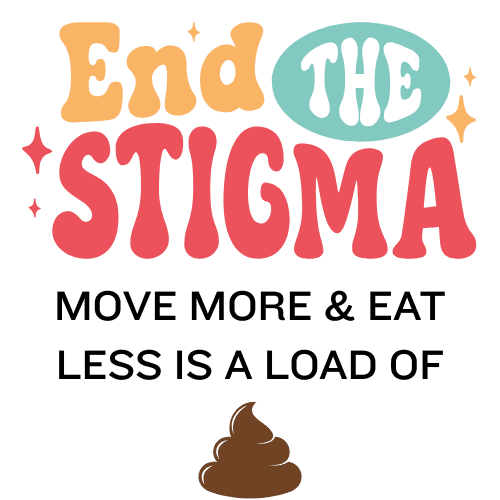
Stigma surrounding weight loss treatment in Australia is a significant barrier to effective healthcare, impacting millions who feel embarrassed or ashamed to seek help. Unfortunately, many healthcare professionals still rely on outdated advice, often summarised as "just eat less and move more." This oversimplified view ignores the complex nature of obesity as a chronic, relapsing condition, as supported by extensive research. At Downscale Health, we emphasise compassionate, evidence-based care that respects individual experiences and scientific understanding. Understanding the Need to Combat Weight Loss Stigma Weight stigma is rampant in Australia, with over 3.1 million Australians experiencing discrimination based on their appearance. Alarmingly, nearly half of these instances are attributed to weight. Such biases manifest in various environments, from families and schools to workplaces, social media, and healthcare settings. The common narrative that suggests personal responsibility for one's weight contributes to significant harm, including increased rates of depression, body dissatisfaction, avoidance of healthcare, maladaptive behaviours like binge eating, and even elevated mortality risks. Government reports indicate that public health campaigns, while well-intentioned, often reinforce stigma by focusing solely on individuals' responsibility, inadvertently alienating those who need support the most. The Scientific Evidence Against "Eat Less, Move More" Contrary to the misconception that obesity is merely a matter of willpower, scientific findings have revealed a more nuanced reality. Post-weight loss, the body activates biological mechanisms that resist further weight loss. For instance, levels of leptin, a hormone that suppresses hunger, decrease, while ghrelin, a hormone that stimulates appetite, increases. Additionally, the basal metabolic rate drops, meaning individuals burn fewer calories at rest. Many patients are prematurely taken off medications or support once they reach a "healthy" BMI, despite robust evidence showing that most will regain weight without continuous treatment. The set point theory further explains how the body defends its highest recorded weight through hormonal changes, making long-term maintenance challenging and relapse common. A Holistic Approach to Treatment At Downscale Health, we recognise the importance of treating each person as a whole individual rather than merely a number on a scale. Our clinical care is tailored to respect the complexities of individual biology, and we provide ongoing support for long-term success without blame or shame. This approach aligns with the recommendations outlined in the National Obesity Strategy and various advocacy bodies. We advocate for listening to patients with lived experiences, updating policies to prohibit weight-based discrimination, and educating healthcare professionals on respectful, evidence-based care. Advocating for Change Australians deserve a healthcare system that prioritises their wellbeing and dignity. Weight stigma not only harms individuals but also hinders access to effective, evidence-based weight management solutions, ultimately impacting collective health outcomes. The path forward is clear: health leaders must actively challenge stigma, shift away from personal blame, and promote tailored, ongoing medical support. At Downscale Health, we are committed to championing this change by focusing on science, respect, and empowering every Australian on their weight journey. References National Obesity Strategy 2022–2032, Australian Government Department of Health and Aged Care, accessed 27 August 2025, https://www.health.gov.au/sites/default/files/documents/2022/03/national-obesity-strategy-2022-2032_0.pdf Weight stigma in Australia: a public health call to action, Public Health Research & Practice, October 2022, https://www.phrp.com.au/issues/october-2022-volume-32-issue-3/weight-stigma-in-australia/ The Real Cost of Appearance Ideals and Discrimination, Butterfly Foundation, July 2025, https://butterfly.org.au/news/butterfly-foundation-combats-weight-based-discrimination-at-australias-first-weight-stigma-conference/ National Obesity Strategy 2022–2032 – At a glance, health.gov.au, accessed 27 August 2025, https://www.health.gov.au/sites/default/files/documents/2022/03/national-obesity-strategy-2022-2032-at-a-glance-summary-with-a-logic-framework_0.pdf Applying a Weight Stigma Lens to Australian and International Obesity-Related Policies, National Institutes of Health PMC, April 2025, https://pmc.ncbi.nlm.nih.gov/articles/PMC11981819/ Obesity stigma is a barrier to action, Prevention Centre, September 2021, https://preventioncentre.org.au/news/obesity-stigma-is-a-barrier-to-action/ Adult obesity management in Australia, Australian Journal of General Practice, September 2024, https://www1.racgp.org.au/ajgp/2025/april/adult-obesity-management-in-australia Set Point Theory clinical information sheet, Centre for Clinical Interventions WA, https://www.cci.health.wa.gov.au/~/media/CCI/Mental-Health-Professionals/Eating-Disorders/Eating-Disorders---Information-Sheets/Eating-Disorders-Information-Sheet---Set-Point-Theory.pdf The role of leptin and ghrelin in the regulation of food intake and body weight, PubMed, https://pubmed.ncbi.nlm.nih.gov/17212793/ Metabolic Consequences of Weight Reduction, StatPearls, National Center for Biotechnology Information, https://www.ncbi.nlm.nih.gov/books/NBK572145/ The impact of weight bias globally: how to shift the stigma, World Obesity Federation, https://www.worldobesity.org/news/the-impact-of-weight-bias-globally-how-to-shift-the-stigma A position statement from the World Obesity Federation, PubMed, https://pubmed.ncbi.nlm.nih.gov/37846179/