Inflammation and Obesity: The Hidden Metabolic Link
Obesity drives chronic low-grade inflammation that fuels insulin resistance, fatty liver, and heart disease. Here is what the evidence actually shows.
Downscale Weight Loss Clinic Team · Published 30 August 2026
Medically reviewed by Justin Black, Nurse Practitioner · 10 September 2026
Written from Australian and international clinical guidance and peer-reviewed research, and reviewed by a registered nurse practitioner before publication. Our clinicians are registered with AHPRA and searchable on the public register.
This page is general information, not medical advice, and it is not a diagnosis or a treatment recommendation. Talk to your own clinician about your situation.
6 min read
Inflammation and Obesity: The Hidden Metabolic Link
Category: Weight Management
What Is Really Happening Inside the Body?
Obesity is not simply a matter of carrying extra weight. It is a recognised chronic disease in which expanded, stressed fat tissue can drive persistent low-grade inflammation — quietly affecting metabolism, blood sugar regulation, heart health, and long-term disease risk.
Understanding this connection changes how we think about obesity treatment, and why sustainable medical management matters far more than willpower-based approaches.
Why Fat Tissue Becomes Inflammatory
Adipose tissue is not a passive energy store. It functions as an active endocrine and immune organ, producing hormones, signalling molecules, and immune mediators that influence the whole body.
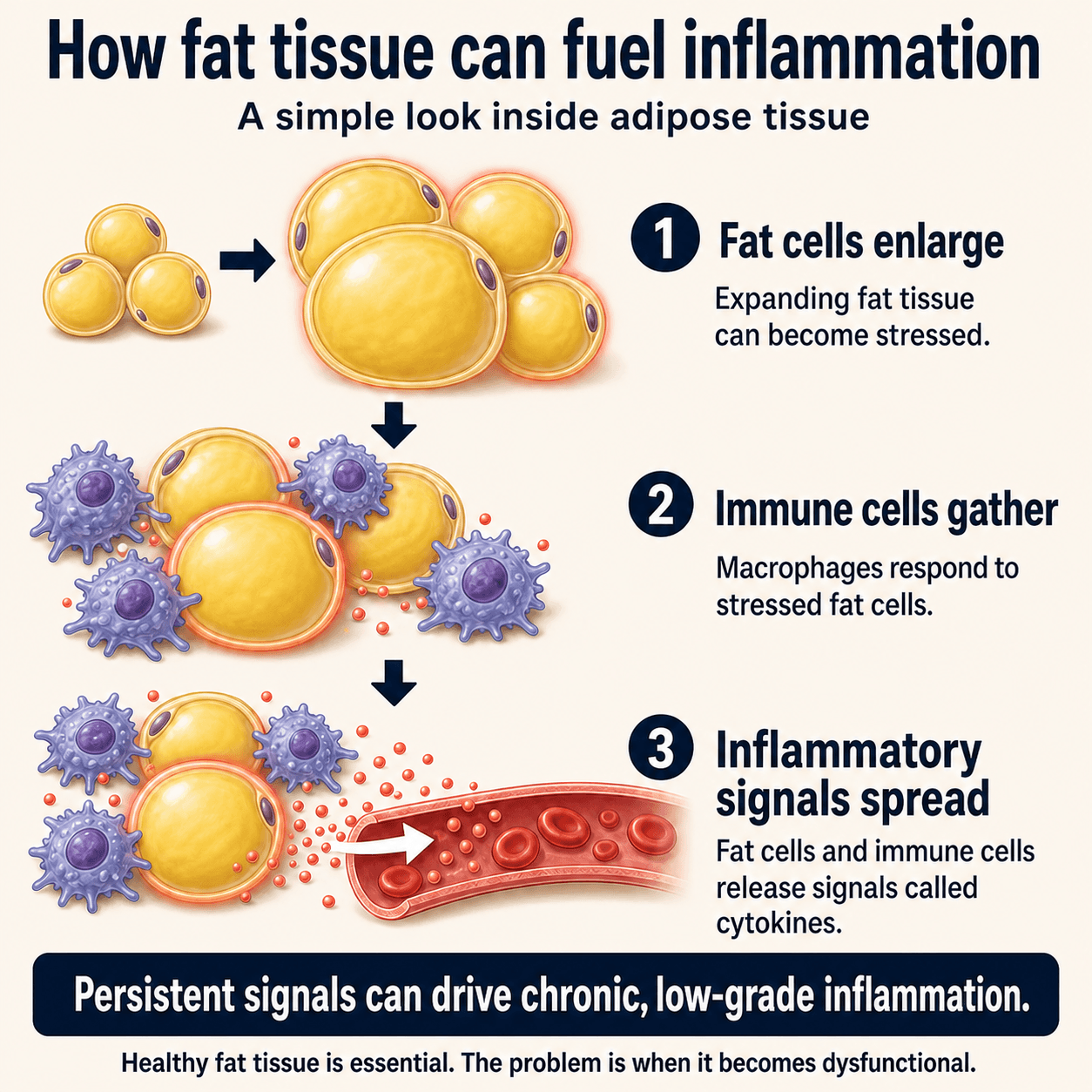
As fat tissue expands — particularly in visceral depots deep within the abdomen — several changes occur at a cellular level:
-
Adipocytes (fat cells) enlarge under increasing metabolic load
-
Local oxygen delivery can become inadequate as tissue mass outpaces its blood supply
-
The tissue environment shifts toward cellular stress, immune cell recruitment, and inflammatory signalling
Macrophages accumulate within dysfunctional fat tissue and contribute to the release of inflammatory mediators including tumour necrosis factor-alpha (TNF-α), interleukin-6 (IL-6), and other cytokine pathways. This process is not dramatic or acute the way an infection is. It is chronic, lower-grade, and persistent — which is precisely why it can go unnoticed for years while quietly contributing to metabolic damage.
This is the biological basis for describing obesity as a state of chronic low-grade inflammation.
Why This Matters Clinically
The inflammatory environment associated with obesity is closely linked to insulin resistance — a state in which tissues become progressively less responsive to insulin's signals. Over time, glucose regulation deteriorates and the risk of prediabetes and type 2 diabetes rises substantially.
The same inflammatory changes are connected to a broader pattern of metabolic dysfunction, including:
-
Dyslipidaemia (particularly elevated triglycerides and low HDL cholesterol)
-
Non-alcoholic fatty liver disease (now increasingly termed metabolic-associated steatotic liver disease)
-
Elevated cardiovascular disease risk
-
Renal stress and early kidney function changes
-
Hormonal disruption, including effects on reproductive health
Visceral adiposity — fat stored around internal organs rather than under the skin — appears particularly important in this process. Compared with subcutaneous fat, visceral fat is more strongly associated with adverse metabolic signalling and higher cardiometabolic risk. This is one reason waist circumference and central fat distribution often carry more clinical weight than body mass index (BMI) alone.
Obesity Is Biologically Heterogeneous
Not everyone living with obesity has the same degree of inflammation or the same metabolic risk profile. Fat distribution, genetics, sleep quality, obstructive sleep apnoea, physical activity levels, diet quality, medications, reproductive stage, and coexisting conditions all modify the inflammatory burden differently in each person.
This heterogeneity has real clinical consequences. Two people with the same BMI may have markedly different glucose control, triglyceride levels, liver risk, energy levels, and responses to treatment. It also helps explain why obesity management cannot be reduced to simplistic narratives about eating less and moving more — the biology is considerably more complex.
At Downscale Health, this individual variability is central to how we approach assessment and treatment planning. A one-size-fits-all approach does not reflect the evidence, and it does not serve patients well.
Can Weight Loss Reduce Inflammation?
The evidence supports a clear answer: yes. Meaningful and sustained weight loss can reduce adipocyte stress, improve insulin sensitivity, and improve several downstream metabolic and inflammatory markers.
The most clinically meaningful improvements are typically seen in:
-
Waist circumference and visceral fat burden
-
Blood pressure
-
Triglycerides and lipid profile
-
Glycaemic control (HbA1c and fasting glucose)
-
Liver enzyme levels and fatty liver risk
-
Overall cardiometabolic risk profile
This does not mean every marker normalises immediately, or that every patient responds at the same pace. Individual variation in treatment response is real and expected. However, the overall evidence consistently supports that reducing adipose burden — particularly visceral fat — improves the inflammatory environment that accompanies obesity and drives long-term disease risk.
What Should Actually Be Tracked?
Routine clinical management of obesity should focus on actionable markers rather than broad, non-specific inflammation panels. Clinically useful measures typically include:
-
Body weight trend and waist circumference
-
Blood pressure
-
HbA1c or fasting glucose
-
Full lipid profile (with ApoB considered in higher-risk patients, as it may better reflect atherogenic particle burden than LDL cholesterol alone)
-
Liver enzymes where clinically indicated
-
Kidney function in relevant clinical contexts
C-reactive protein (CRP) can be mildly elevated in obesity, but it is non-specific and may rise for many other reasons including infection, injury, smoking, and autoimmune conditions. CRP may provide useful context in selected situations, but it is rarely the centrepiece of longitudinal obesity management.
Fashionable "anti-inflammatory" testing panels marketed directly to consumers rarely change clinical management and should not replace evidence-based metabolic assessment.
What This Means for Treatment
Inflammation is one of the most important biological links between obesity and chronic disease. It helps explain why obesity is associated with insulin resistance, type 2 diabetes, fatty liver disease, and cardiovascular complications — and why effective treatment needs to address more than a number on the scales.
The practical goal is not to chase fashionable anti-inflammatory supplements or interventions without evidence. It is to reduce the drivers of metabolic stress through sustainable, evidence-based obesity care. That means addressing:
-
Sleep quality
-
Physical activity
-
Nutrition quality
-
Risk factor management
-
Pharmacotherapy where clinically appropriate, including modern obesity medicines that have demonstrated meaningful metabolic benefits beyond weight reduction alone
For Australians seeking structured, medically supervised weight management, telehealth services like Downscale Health offer GP-led care that takes the underlying biology seriously — not just the number on the scales.
References
-
Gkrinia EMM, et al. The Mechanisms of Chronic Inflammation in Obesity. 2025. PMC12110701.
-
Is Adipose Tissue Inflammation the Culprit of Obesity-Associated Chronic Comorbidities? 2025. PMC12531753.
-
Kawai T, et al. Adipose tissue inflammation and metabolic dysfunction in obesity. Am J Physiol Cell Physiol. 2021. PMC8294624.
-
Khanna D, et al. Obesity: A Chronic Low-Grade Inflammation and Its Markers. Cureus. 2022. PMC8967417.
-
Physiopathological mechanisms related to inflammation in obesity and type 2 diabetes mellitus. Front Endocrinol. 2023. PMC10308320.
-
Molecular and pathophysiological relationship between obesity and inflammation. Int J Mol Sci. 2024. PMID: 38606791.
-
Inflammatory mechanisms linking obesity and metabolic disease. J Clin Invest. 2017. PMC5199709.