Perimenopause Belly Fat: Why Your Shape Is Changing
Your weight is steady but your waist is changing. Here's the evidence behind why perimenopause shifts body composition — and what actually helps.
Downscale Weight Loss Clinic Team · Published 12 November 2026
Written from Australian and international clinical guidance and peer-reviewed research. Our clinicians are registered with AHPRA and searchable on the public register.
This page is general information, not medical advice, and it is not a diagnosis or a treatment recommendation. Talk to your own clinician about your situation.
5 min read
Perimenopause Belly Fat: Why Your Shape Is Changing
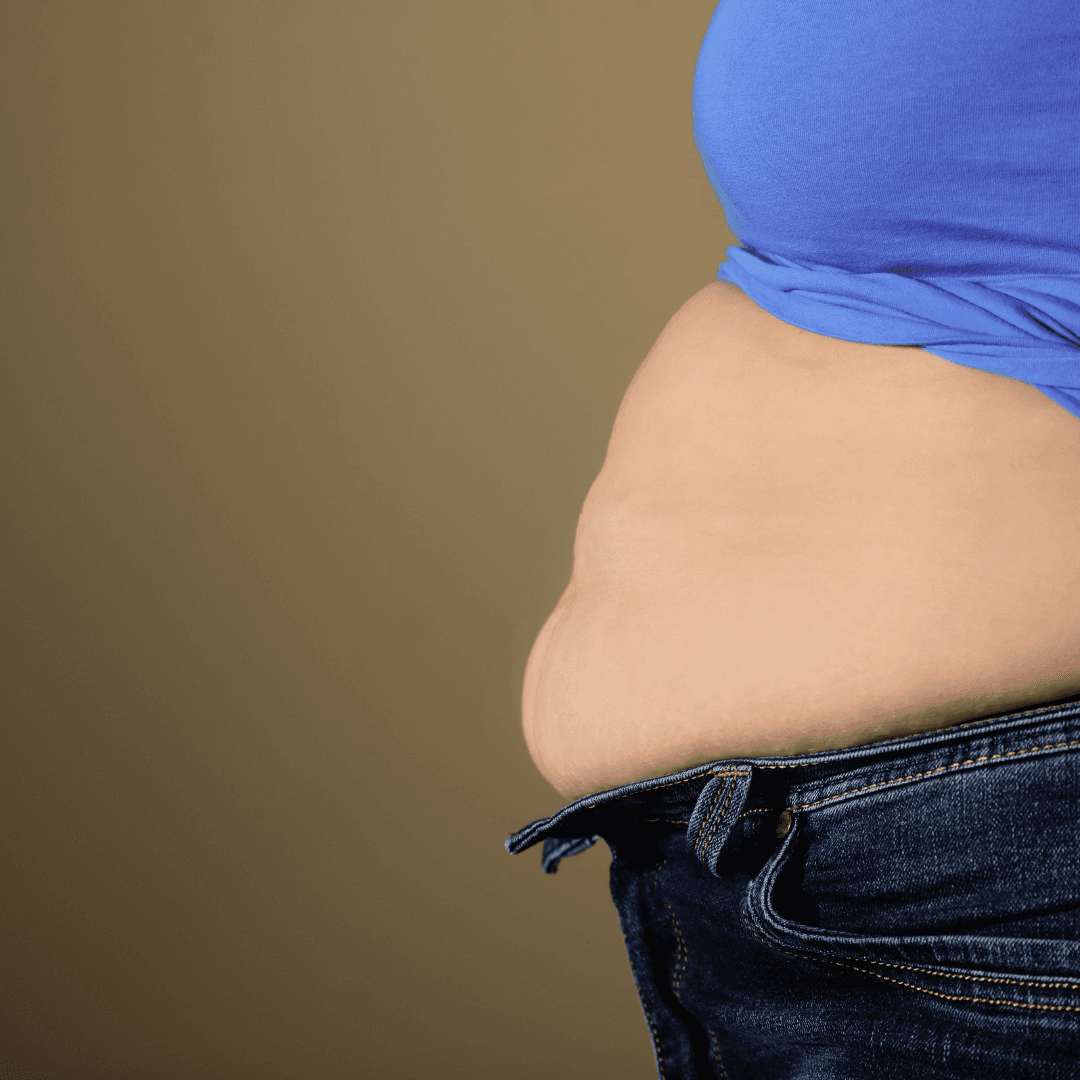
Your jeans are tighter at the waist. The number on the scales looks about the same. You haven't dramatically changed how you eat or move. So what exactly is going on?
This is one of the most common — and genuinely confusing — experiences women describe during the menopause transition, and there is solid evidence behind why it happens.
Why Your Body Composition Changes During Perimenopause
During the menopause transition, the body can gain fat mass while simultaneously losing lean muscle mass. Fat also tends to redistribute, becoming more concentrated around the abdomen rather than the hips and thighs. These two changes can partly cancel each other out on the scales, which is why the number you see may stay relatively stable even as your shape shifts noticeably. [1]
The Study of Women's Health Across the Nation — one of the most comprehensive longitudinal studies tracking women through the menopause transition — found that fat gain accelerated and lean mass began declining around this time, yet the average rate of overall weight gain did not noticeably increase. [1]
In plain terms: the scales and your clothes can tell you genuinely different things, and both can be right at the same time.
This also explains why focusing only on a past weight number can miss changes that matter more to how you feel — your strength, your mobility, your energy, and the way your body moves day to day.
Is It Belly Fat or Bloating?
Not every change at the waist is the same, and noticing when it happens can help you describe it more accurately.
-
If your waistband feels comfortable in the morning but tight after meals, bloating is a reasonable explanation to explore
-
If your clothes have gradually started fitting differently over several months — including first thing in the morning — that points to a different pattern, more consistent with the body composition changes described above
Both patterns can have more than one cause. [2, 3]
Bloating that doesn't settle deserves a conversation with your GP. Seek advice promptly if bloating is accompanied by persistent abdominal pain, unintentional weight loss, or feeling full unusually quickly. These symptoms warrant timely assessment. [3]
What's Worth Focusing On When Weight Management Feels Harder After 40
Keep Strength Training in the Picture
Walking is genuinely valuable for cardiovascular health and general wellbeing. Strength training does something different — it challenges your muscles in ways that support lean mass, bone density, and functional strength. Resistance bands, free weights, gym machines, and bodyweight exercises are all legitimate options. If you're starting out, begin with what you can do comfortably and progress gradually. [2, 4]
The Australasian Menopause Society recommends resistance exercise as part of a comprehensive lifestyle approach during and after the menopause transition — not just for body composition, but for long-term musculoskeletal health. [4]
Look at What's Disrupting Your Sleep
Night sweats, hot flushes, and other vasomotor symptoms that wake you repeatedly can erode the quality of rest that underpins almost everything else — your energy, your appetite regulation, your motivation to move, and your capacity to maintain routines. Poor sleep and chronic fatigue make healthy habits genuinely harder to sustain, not just less appealing. [2, 4]
If you're waking hot several nights a week and it's affecting your daily functioning, that symptom deserves attention in its own right. You can seek support for sleep disruption or other menopause symptoms regardless of your weight or weight goals.
Start With the Change That's Bothering You Most
A gradually changing waist, persistent bloating, and weight regain are related but distinct concerns that call for different conversations. It's worth getting clear on which one is most relevant to you.
If the scales are steady but your shape has shifted, consider what matters most to you right now. For some women, that's feeling stronger. For others, it's moving more comfortably, sleeping better, or simply understanding a change they've noticed and haven't been able to explain.
At Downscale Health, we work with women navigating exactly these kinds of changes — where the standard advice hasn't quite matched the experience. Our telehealth GPs take a whole-picture approach to weight management in midlife, accounting for body composition shifts, hormonal context, and lifestyle factors that make this stage genuinely different from earlier decades.
Whether you're looking for clinical support or simply trying to understand what's happening in your body, you don't owe anyone an explanation for seeking information.
For more on the broader picture of how the body changes through midlife, read Why Your Body Changes After 40.
References
-
Greendale GA, Sternfeld B, Huang M, et al. Changes in body composition and weight during the menopause transition. JCI Insight. 2019;4(5):e124865. doi:10.1172/jci.insight.124865
-
Australasian Menopause Society. Weight management and healthy ageing. Available at: www.menopause.org.au
-
Healthdirect Australia. Bloating. Available at: www.healthdirect.gov.au
-
Australasian Menopause Society. Lifestyle and behavioural modifications for menopausal symptoms. Available at: www.menopause.org.au